Introducing… Sensory Politics of Violence
This post marks the second in a series dedicated to discussing each of the organising themes of the Routledge International Handbook of Sensory Criminology, in preparation for its launch. Each piece will leave comments open as an experiment in discussion. Please feel free to leave talking points or ask questions – we particularly welcome questions from students.
Each section of the book opens with a similar discussion to which each of the contributing authors for that segment were invited. Some joined in real time, others submitted written – or even recorded – contributions and others declined.This first section opens with a conversational piece from Liam Gillespie, Kanupriya Sharma and Hannah Wilkinson: Sensory violence: traces, echoes, afterlives. They observe that “across these chapters, the authors take up a shared commitment: to track violence not only in what is said, but in what is heard. Not only in what is seen, but in what is sensed, remembered, absorbed, and carried. Their work attunes us to forms of harm that exceed language, that are inscribed in the body, ambient in the atmosphere, or embedded in institutional practices. Together, they “challenge the abstraction and sanitisation that often defines academic knowledge, insisting instead on research that is sensorially attuned, ethically grounded, and politically alive”.
These works disrupt conventional treatments of violence, reflecting approaches which recognise both its material and symbolic aspects as well as those of its effects. Violence, here, can be thought of as something that lingers, is carried in sensorial experience, relived and revisited through sensory reminiscences that inflict additional harms. The sensory is fashioned here as a provocation to rethink our understanding of what constitutes violence in substance and meaning. I briefly introduce each of the chapters before commenting on how they might collectively inform future approaches to theory and practice, finishing with a few questions that might stimulate discussion.
The first piece is from Liam Gillespie who demonstrates that “sound is not just a medium of communication but a weapon of mobilisation in “Listening to Donald Trump’s Voice: ‘Fight like Hell!’, the Capitol Hill Riots and the Spectre of Teleprompter Trump. Chapter two, by Amanda Holt and Sian Lewis “explores the role of sound and silence in the perpetration, experience and articulation of gender-based violence”. Colm Walsh follows “foregrounding the auditory architecture of conflict” in chapter three “The sound of Violence: Paramilitary experience in Ireland”. Colm focuses on communities affected by the Northern Irish conflict, exploring how sonic cues such as gunshots, sirens and silences are woven into tapestries of everyday memory and collective identity. He explores how these experiences became central to how these communities sensed, interpreted and navigated violence. Hannah Wilkinson closes this section with chapter four: “War, Colonialism and the Senses: “You can’t unsee or unhear that shit”. Through Hannah’s interviews and use of object and photo elicitation with British veterans of the War on Terror, she explores how violence becomes internalised through the rituals of the military body, leaving embodied stains that resist attempts to erase them.
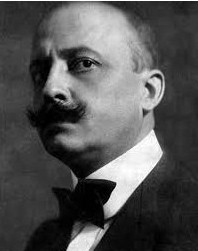
Sound has a long and dark history in the theatre of war and the production of what Goodman terms an “ecology of fear” (2012). Sound has long been interwoven with activities of hostility and bloodshed. When Marinetti sought to capture his experience of the siege of Adrianopoli of 1914, in his sound poem “Zang Tumb Tumb”, it was the auditory imagination he attempted to evoke. The “belliphonic” – Martin Daughtry’s term for the cacophony of armed combat and the wounding practice it represents – provides an instructive and compelling lens through which to understand trauma and survival in this context (Martin Daughtry 2017). This takes numerous forms; drums, sonic and ultrasonic weapons such as long-range acoustic devices LRADs, the increasing, deployment of drones emitting the sound of children crying to lure targets from cover, the “dead air” that hangs heavy in creative recreations of the Great War soundscape (Gough and Davies 2017). “Moaning Minnie and the Doodlebugs” dominate collective imaginings of the second world war (Moshenka 2017), rather than the colour of mustard gas. While there are numerous works considering the wider sensescape of warfare and transition (e.g. Neidhart 2002, Birdsall 2012, Saunders and Cornish 2017, Mrozek 2024) it is perhaps no coincidence that sound dominates considerations of violence and its sensory politics in much of this section.
Liam disrupts assumptions of the passivity of listening, implicit in sonic treatments of violence, when he evokes Jacques Lacan informing his students that the “ears have no lids” (I had always thought it was Carpenter and McLuhan). His analysis of Trump’s mobilisation of support implicates the listener-as-actor, their participation every bit as central to decoding Trump’s subverbal inarticulacy in the creation of what Hegarty terms a “spectacle of listening” (2021). Given the current state of world politics and the rise of the right, it has rarely been more important to attempt to account for the popularity of leaders like Trump and the violence they espouse. Gillespie’s work invites us to forensically dissect Trumps seeming inarticulacy and the rousing appeal that lies beyond, and beneath, mere words, to account for how sound works to mobilise the power of the collective. Amanda and Sian underscore the potency of silence as a tool for victimisation in their account of the role of silencing in gender-based violence. Here, power is mediated through the repression of voice, rather than being mobilised in resistance to it. Amanda and Sian demonstrate how sound is both a site of, and tool for, gender-based violence while sometimes providing the keenest indication of its existence, despite often being overlooked. Not only does verbal aggression often provide an indication of the existence of other types of abuse, but “the voice itself is a tool of violence, causing immediate and long-term harm”. Together these contributions enhance our understanding of the flows of power, and how voice can be harnessed as a tool for violence.
Colm powerfully argues that sound is a crucial element of the experience of violence in conflict-affected areas of Ireland. Like Amanda and Sian, he maintains the need for an increased auditory focus as a means of better understanding the impact of violence. While Colm’s account of paramilitary experience in Ireland makes various references to inter-personal exchanges, his focus more broadly is on the multiplicity of ways in which violence and its sensescape was interwoven into the fabric of everyday life – particularly in 80’s Belfast, a fraught time in which sectarian violence featured heavily. He speaks evocatively of the soundscapes of the time; car sirens, crackling fire, gunshot, but also of the eerie silence that followed. For Colm, the sensory imposition of paramilitary activity informed his sense of West Belfast as a place, the effects and affects of violence reverberating long after the ceasefire, informing his sense of space, place and identity. His work emphasises the instructive potential of sound as a means of understanding how power operates, but also how sound is implicated in various strategies to provoke, disempower, repel and entice those subject to violence.
Sound, and the sensory more broadly, attune us to the lasting impacts of violence. Colm’s analysis of interview data demonstrates how sound “catalyses memory and can create the conditions for trauma” reminding us too, that trauma has sensory components. Hannah’s work most specifically and extensively deals with this aspect of violence. Her focus on the experience of soldiering in Afghanistan and Iraq considers how photo and object elicitation facilitated the transition from speaking about familiar things to their “visceral recollections of seeing, hearing, smelling, tasting and touching death in war”. She argues better accounting for the sensory deepens our understanding of the enduring effects of colonial state violence but also offers the capacity for repair and resistance. Hannah draws on Hockey’s (2020) work to argue that smell is a “core site of survival and suffering”. These assessments echo the testimony and vivid recollections of those she interviewed, who recalled the sensory afterlives of their memories of war and loss with a potency reflecting their endurance. As Liam, Hannah and Kanupriya reflect “the violence they perpetrated and witnessed was not abstract. It lived in their muscles, their hunger, their sleep and their everyday living. Hannah has subsequently co-edited an open access issue of Criminological Encounters – “We must persist! Towards a Global Criminology of War” available here: https://www.criminologicalencounters.org/index.php/crimenc/issue/view/10 it was too important not to include here, and I hope this provides a starting point for students and researchers, now more urgently than ever!
Together, these pieces demonstrate the importance of more closely attending to the sensory politics of violence whether inter-personally, nationally or internationally – specifically with reference to colonial legacies of violence and trauma. In “Listening to war” Martin Daughtry (2017) speaks of the importance of developing a phenomenology of violence. These contributions demonstrate the necessity of not only deepening our understanding of subjective experience but also of extending this to account for intersections between subjective experience, mediations of power and its cultural significations and the sensory afterlives of violence. Whether it is the physical qualities of sound, its inescapability when under siege or its pre-eminence – relative to other senses, excluding sight – in the Western aesthetic that account for its dominance in much of this section, each demonstrate the centrality of the sensory to experiences of violence. From the suffocation of gender-based violence to considerations of the sense-legacies of colonialism, each chapter hums with the vivid, theoretical potentials of incorporating a sensory approach. One that is resolutely multidisciplinary, creative, culturally attuned and intrinsically human.
Some questions:
Is there something about the sensory that encourages a corresponding concern with ethics?
If so how, and what might the implications of this be?
How does the sensory lend itself to innovative methods?
What are the limitations of this?
Why does sound lend itself particularly well to discussions of violence?
What are the creative possibilities of foregrounding the sensory in research on violence?
What solutions might be offered for undergraduates looking to adopt sensory approaches, but struggling to think of ways to navigate increasingly restrictive ethics policies?
What might Alison Young have meant by her call to “listening criminologically” (2023)
References
To cite this blog: Herrity, K. (2025) December 1st, 2025 “Introducing… Sensory Politics of Violence” www.sensorycriminology.com
To cite the book: Herrity, K., Sharma, K., Umamaheswar, J., Warr, J. (2026) The Routledge International Handbook of Sensory Criminology. London: Routledge
Birdsall, C. (2012) Nazi Soundscapes: Sound, technology and urban space in Germany, 1933 – 1945. Amsterdam University Press – published through OPEN ACCESS PUBLISHING IN EUROPEAN NETWORKS: https://library.oapen.org/handle/20.500.12657/34484
Goodman, S. (2012) Sonic warfare: Sound, affect and the ecology of fear. MIT Press
Gough, P., Davies, K. (2017) ‘Dead Air’: the acoustic of war and peace – creative interpretations of the sounds of conflict and remembrance in Saunders, N., Cornish, P. (2017) (eds) Modern Conflict and the senses. London: Routledge
Hegarty, P. (2021). Annihilating Noise. Bloomsbury Academic Press, New York, NY.
Hockey, J. (2020) ‘Sensing regimes of war: Smell, tracing and violence’, Security Dialogue, 51 (2–3): 155–173.
Martin Daughtry, J. (2017) Listening to war: sound, music, trauma and survival in wartime Iraq. OUP USA
Moshenka, G. (2017) Moaning Minnie and the Doodlebugs: Soundscapes of air warfare in Second World War Britain in Saunders, N., Cornish, P. (2017) (eds) Modern Conflict and the senses. London: Routledge
Mrozek, B. (2024) (ed) Sensory Warfare in the Global Cold War: partition, propaganda, covert operations. Pennsylvania: Penn State University Press.
Neidhart, C. (2002) Russia’s Carnival: the smells, sights and sounds of transition. London: Bloomsbury
Saunders, N., Cornish, P. (2017) (eds) Modern Conflict and the senses. London: Routledge

 Sensory Criminology