Categories
Interviewing research Research methods sensory Uncategorized Violence

Coming to one’s senses: knowledge production, situatedness, and vulnerability in criminological interview work.

Louise Gerbier

My PhD on the Northern Irish conflict and the subsequent widening of its scope to counterinsurgency policies and practices led me to interview torture survivors, former detainees – not all having had the right to a (fair) trial – as well as victims and survivors of police brutality and terrorism. Indeed, I was interested in the rawness of their experience – my qualitative methodology was precisely looking for situated accounts of embodied experiences of violence, and how they were perceived and recalled both individually and collectively. I hoped that conducting a new series of semi-structured interviews in post-conflict Northern Ireland would offer different insights into the interplay of subjectivities that builds communities, while deepening our understanding of sensory experiences of political violence.

Each interviewee came to our discussion with a developed sense of self and a clear idea of the labels they wanted me to use to describe them: decades of mediatisation and community-work had made seasoned communicators of a lot of them. More often than not, though, they had some doubts on whether they’d be telling me all or part of their story.

Their distrust was informed by collective experience: not only were they recounting criminalised activities, they were also aware of the dangers posed by my potential relation to power. Indeed, both the Boston College tape scandal, in which interview recordings had been used in the court of law, and the ongoing Legacy Act debates, which considered changing amnesty policies for individuals coming forward with Troubles-related stories, threatened the very possibility of memory work and ethical research. What made my PhD relevant in social sciences rooms where research methods, elections or identity politics were discussed also made the work at its core more difficult.

Beyond that tension of public and private, personal and collective, I was expecting the sensitive matters at the heart of the interviews to challenge the “neutrality” I had been trained to strive for, wondering what room would be left for empathy in a semi-structured interview with a recorder set on the table.

That was without taking into account who I was, and how I came across. A 5’2” woman, with an accent aiming for Received Pronunciation but often lost in a French melody, I am severely visually impaired and often use a white cane to move about. Though my disability can become “invisible” if I sit down and don’t have to read something in front of my interlocutor, I was thus visibly disabled, at the very least when I arrived for a discussion or followed my interviewee around the neighbourhood for a walking interview. I could not see the bullet holes of a shoot-out from afar, so Martin* took me directly to the wall he was describing; I got lost in the community centre where we were supposed to meet, so Seamus* came and fetched me; Patrick’s* wife enquired about my health after I had to reschedule an interview.

I learned quickly that what is off the record matters greatly, and that my body, just like my interviewees’, escaped the record – I stumbled as Tom* guided me through a cemetery and he caught my arm; John* hugged me when he realised I could not see him properly, and asked many questions in the hushed tones of a (self-declared) worried grandfather.

The distance I had been told was expected of the researcher disappeared beneath the warmth of strangers offering their arms to guide me, or the lilt of their accent describing their hometown, which I would only discover through their eyes, their voices. The blur and sometimes chaos of my senses was overridden by their readiness to lend their own senses. While Martin’s voice shook, my hands touched the cold stones as I struggled to imagine the bullets that had wrecked the stone, having never even heard a gunshot. The walking interview with Tom* took on unexpected gravitas as he stopped pointing from afar and decided to bring me to each grave, urging me to get closer, as I tried to picture the gunbattle he was describing, adding another layer to his vivid visual storytelling.

Senses were coming to the fore, and I had not even started writing about them.

More strikingly perhaps, Liam* decided to call me back after his first interview, having realised during our off-the-record conversation that I knew what spending weeks in the hospital felt like. He wanted to tell me about his own hospital visits after having undergone torture, and just like Sammy*, who’d experienced a severe beating as a teenager, would later, he dived into the description of his pain and its intertwining with his political perspective like he had not before. I’ve never been beaten, but I do know how physical pain can reorganise every instant of a life and strip you down, exposing your self as it does your bare body.

Without it being ever planned, sometimes before the interview had even begun, the imbalance of vulnerability seemed thus partly taken care of: I might receive my interviewees’ raw grief, potent trauma and deep-rooted anger ; I might get a glimpse of who they had been, at sixteen or forty-two, in a prison cell or facing a police baton – I might even receive what I was looking for, their situated perspective on their engagement in violent political activity… but they had seen my raw vulnerability first. They had been given evidence that I was putting myself in a complex physical situation – meeting with unknown men in areas I’d never been, their faces forever a blur, just like the pavement I would have to navigate – in order to listen to their stories. That counted for something. My physiological experience, and my openness in discussing it, served as grounds for belief that they could work with me.

That’s why the talks and the walks we shared have always been multifaceted in my eyes: my blurry apprehension of noisy, colourful 21st c. Belfast, just like its anchoring in the warmth of the cups of teas each interviewee has always insisted to offer me, is interwoven with senses of the past – the spectrum of state and paramilitary abuse brought to life by shaking hands and tearful eyes has always made me feel like decades of political violence were in the room with us. From the re-enactment of torture, as brutal as it always is, to the tears of grief, as fresh as the day a brother died, my interviewees opened the door to what McDonald calls an “archive of sensation”. Beyond the years, I could sense the way violence had felt, still felt, for them; in that, we shared, for a moment, a community of senses.

My own private, intimate relationship with my body and the way it moved around the world has always been a public matter, like it is the case for most disabled people, something the disabled poet and academic Molly McCully Brown conveys brilliantly in her collection Places I’ve Taken My Body (2021). Strangers and colleagues alike have never stopped themselves from commenting on my disability. Regardless, disability, constructed politically, was not something I had had in mind when presenting my PhD project. When I began researching terrorism, civil conflict and carcerality before I wrote my first masters’ dissertation, which ended up discussing the socio-political experience of the 1981 hunger strike through a study of its bodily and sensory reality, I did know that I wanted to foreground the senses, as I was myself deeply aware of how “the personal is political”. Regardless, my positionality within academia came with too many constraints, and the shadows of ableism were too stark for me to do anything but hide my disability up until it was no longer possible, refusing to acknowledge it in cover letters and applications… That these constraints meant that white, abled men were most likely to access both fieldwork and funding – as well as networking events, nonchalant coffee breaks in inaccessible rooms and suggestions made in fine print documents – was a fact of life in the ivory tower in which I had the privilege to work, still, as a white woman from an educated, upper-middle class background.

The reworking of boundaries described above contributed to transform my experience of research and, I wager, my interviewees’ experience of it as well; the reciprocity of our vulnerabilities challenged the dominant position a researcher is too often in when conducting interviews. My marginalised positionality was enough to put a foot inside the door, and to stay there to listen. Concurrently, this exchange of perspectives and the trade of very intimate, embodied knowledge contributed to demonstrate how critical approaches of social sciences, and criminology in particular, can benefit from the co-construction of knowledge, questioning not only the monopoly of legal and historical interpretation, but its anchoring in an extremely narrow array of sensory perspectives as well.

It has been the greatest learning experience of my first years as a researcher, then, to discover that my own experience was facilitating what I wanted my research to do: acknowledging marginality, giving a voice to embodied political anger and despair, interrogating the stories we tell about ourselves, as private individuals and as citizens. Stripping myself of what contributes to the power asymmetry of social sciences, or at the very least attempting to do so, has led me to have vivid, hopeful, emotional discussions, often with people I had not much in common with, always fuelling a shared belief that political identities and criminological labels cannot be understood properly without our senses.

References

Black, Lynsey, Louise Brangan and Deirdre Healy. Histories of Punishment and Social Control in Ireland. Leeds: Emerald Publishing Limited, 2022.

Kooistra, Alison. “Speaking into Sight: Articulating the Body Personal with the Body Politic”, vis-à-vis: Explorations in Anthropology, vol. 8, no. 1, pp. 1-17.

McDonald, Dave. “Sensory afterlives of child institutionalisation: Oral history, carcerality and social memory”, Incarceration, vol.6, 2025, pp. 1-17.

McCully Brown, Molly. Places I’ve Taken My Body. London: Faber and Faber, 2021.

O’Donnell, Ruan. “Oral History and the Politics of the Troubles: The Boston College Tapes.” History Ireland, vol. 20, no. 2, 2012, pp. 10–13.
Categories
Environment power Research methods sensory Uncategorized

The City That Won’t Let You Sit: Sensory Criminology and Urban Pain

Luisa T. Schneider

What does a city demand of a body when it refuses to let that body stop moving?

Exclusion, displacement, and hostile urban governance come together to regulate and criminalize through law, policy, and space. The effects of this governance on those targeted are lived sensorially. They accumulate in bodies over time and are enacted not only symbolically, administratively, or practically, but also through pain.

Learning from houseless people’s sensory navigation, and from sensory criminology’s attention to how punishment and control operate through the senses (see Herrity et al. 2021 [sensory penalities]), reveals that Western cities govern houselessness through what I conceptualize as deliberate nociception. There is a pervasive, intentional production of sensory pain that functions as a mechanism of regulation. This governance is not primarily enacted at the level of spectacular punishment, but through mundane, everyday encounters that keep people on their feet, in their shoes, and on the move.

From hostile architecture to deliberate nociception

Urban design disciplines and excludes through hostile and defensive architecture. Work on The London spikes controversy by James Petty (2016) or by Roland Rosenberger on Callous Objects (2017), among others, shows how benches, spikes, dividers, and sound deterrents communicate who belongs in the city and who does not. These analyses tend to frame hostility as deterrence, moral signalling, or behavioural modification.

If we follow where those who are so “deterred” go, however, we realize that hostile architectures and associated regulations are not simply about discouraging presence. They are about hurting. Pain is not a side effect of urban governance; it is the technique.

How does this work? In Leipzig, where my research took place, people experiencing houselessness are systematically prevented from sitting, lying down, or remaining still for extended periods of time. Public order regulations criminalize “lingering,” “camping,” or Lagern which includes sitting on a jacket, rearranging space for comfort, or resting in place. Benches are segmented, surfaces slanted, sprinklers installed, and classical music is blasted for hours near transport hubs. Together, these practices form an urban environment that produces pain through enforced standing, walking, and sensory overload. Because there are no alternative places available, houseless people are forced either to keep moving or to endure these architectures despite the pain they cause. This is governance through nociception: regulation enacted by targeting the body’s capacity to rest, recover, and withdraw from stimuli.

Limbs as sites of governance

Theoretically, I move away from the abstract notion of “the homeless body” toward limbs as the primary site of governance. Feet, legs, backs, arms, and hands are not metaphorical here; they are infrastructural. They are the means through which people move, carry belongings, access resources, and maintain a fragile sense of home wherever they are (forced to) go. For people experiencing houselessness, home is embodied, mobile, and continually under threat. Home exists in backpacks, shopping bags, and on the body itself. As a result, limbs become overburdened, injured, swollen, infected, and exhausted. The city’s regulatory apparatus targets these very capacities. By prohibiting sitting, discouraging stillness, and enforcing constant movement, urban governance undermines the bodily conditions that make survival possible. This produces a particular form of spatial violence that goes beyond exclusion from space or participation but encapsulates structural violence and denial of bodily possibility. The right to rest, to take off one’s shoes, to withdraw from sensory assault, is effectively reserved for those with access to private housing.

Sensory citizenship and the criminalization of rest

Implicit in these practices is the deeply entrenched assumption that sensory regulation belongs in the private sphere. Housing is imagined as the space where bodies recover from exposure, where shoes come off, where pain can be managed, and where sensory input can be controlled. Public space, by contrast, is designed for movement, productivity, and consumption.

Thinking with Arendt (1958), we can see how deeply entrenched this private–public divide is, how long its durée, and ethnography shows us how it continues to structure contemporary law and urban governance. What is at play here is a violence of non-acknowledgement. Sensory needs need not be actively denied to people experiencing houselessness; rather, those needs are rendered unintelligible once housing is absent. The city refuses to acknowledge and to compensate for what housing would ordinarily provide. The result is a form of sensory citizenship in which some bodies are entitled to stillness, comfort, and recovery, while others are governed through exposure, noise, cold, hardness, and pain. Rest itself becomes suspect, and stillness becomes criminalized.

Methodological intervention: attuning to hostility on the margins

My argument draws on a five-year sensory ethnography with people experiencing houselessness in Leipzig. Crucially, in interviews, collaborators rarely spoke about feet, legs, or standing. Pain was normalized, unremarkable, often unnamed. What made these dynamics visible was sensorial co-presence: walking long distances together, standing for hours, carrying bags, waiting, navigating surveillance, and being repeatedly moved on. Having learned from sensory ethnography (Pink 2015) and work in sensory criminology on thick sensory environments most notably from Jason Warr’s writing on being trapped during a prison fire (2010), I remained with people attending to their sensory worlds, until pain emerged as an unexpected analytic focus.  I describe this methodological stance as attuning to hostility on the margins. It involves tuning into absence as much as presence: the absence of places to sit, to lie down, to recover; the repetition of movement; the accumulation of minor sensations that become debilitating over time. This form of attunement requires staying with the ordinary, the mundane, and the taken-for-granted, where violence often hides most effectively.

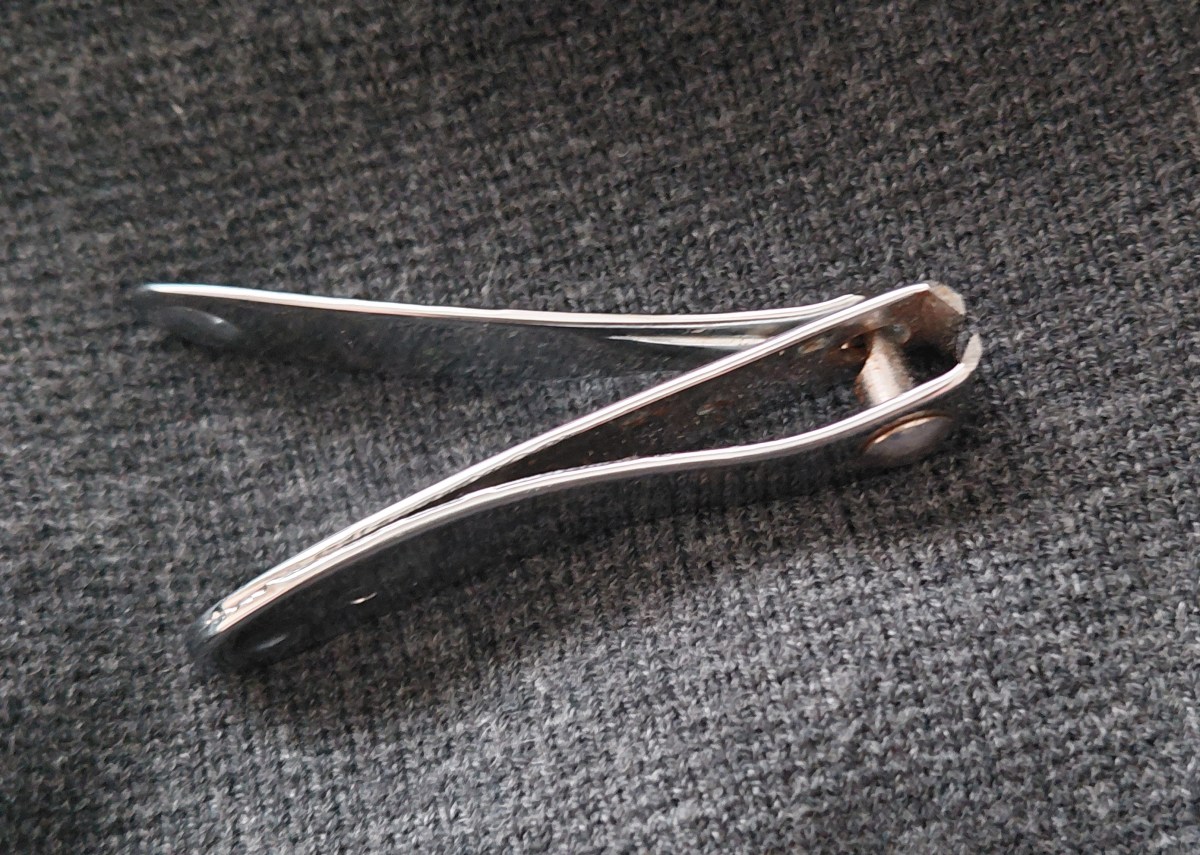
It also highlights how risk logics translate care into threat. For example, nail clippers which are essential for preventing infections are routinely confiscated as potential weapons, illustrating how individual bodily care is reframed as a security risk, echoing broader transformations of risk and responsibility in penality (Hannah‑Moffat 2005).

What this data does for sensory criminology

What do the experiences of houseless people’s urban navigation give sensory criminology?

First, they shift attention from spectacular or acute pain to slow, attritional harm. The pain documented here is chronic, cumulative, and often invisible, resonating with work on chronic pain as something that resists recognition and legitimacy (Johnson 2019). Second, they expand sensory criminology spatially. Rather than focusing primarily on enclosed spaces of punishment such as prisons, cells, or detention centres, they show how open city streets function as punitive environments, governing through exposure rather than confinement. Third, they redirect analytic attention from sensing places to sensing conditions of possibility: who is allowed to rest, to recover, to withdraw, and whose bodies are instead governed through pain. This invites sensory criminology to engage more fully with questions of urban governance, citizenship, and inequality. Attuning to hostility on the margins reveals that, through these forms of governance, houselessness becomes a condition of being kept in pain, on the move, and in one’s shoes. Sensory criminology allows us to see how cities govern through sensation and how suffering is not only produced but carefully designed and hidden in plain sight.

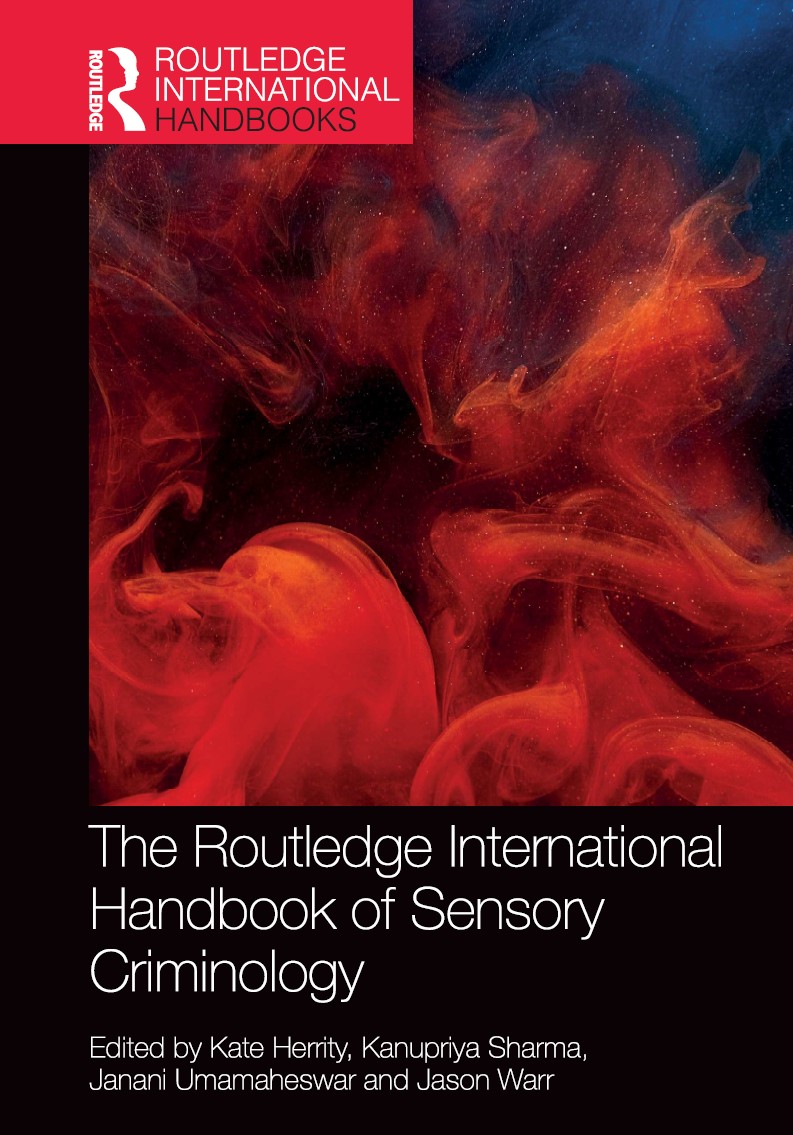
Luisa’s chapter on this subject can be found here: Schneider, Luisa. (2026) ‘Dispossessed realities Houselessness and spatial violence’, in the Routledge International Handbook of Sensory Criminology. Herrity, K., Sharma, K., Warr, J. & Umamaheswar, J. (eds.)  Vol1, Section 6, chapter 19.

References:

Arendt, H. (1998 [1958]). The human condition. Chicago, University of Chicago Press.

Herrity, K., et al. (2021). Sensory penalities : exploring the senses in spaces of punishment and social control. United Kingdom, Emerald Publishing.

Hannah‑Moffat, K. (2005). “Criminogenic needs and the transformative risk subject: Hybridizations of risk/need in penality.” Punishment & Society, 7(1): 29–51. https://doi.org/10.1177/1462474505048132 

Johnson, Mark. (2019). “The landscape of chronic pain: Broader perspectives.” Medicina, 55(182):1–19.

Petty, J. (2016). The London Spikes Controversy: Homelessness, Urban Securitisation and the Question of ‘Hostile Architecture’. DOAJ, 5(1):  67 – 81

Rosenberger, R. (2017). Callous Objects. Designs against the Homeless. Minneapolis: University of Minnesota Press.

Pink, S. (2015). Doing sensory ethnography. London, Sage Publications.

Warr, Jason. (2021). Fire! Fire! – The prison cell and the thick sensuality of trappedness. In Sensory Penalities: Exploring the Senses in Spaces of Punishment and Social Control, edited by Kate Herrity, Bethany E. Schmidt and Jason Warr, 19–34. Emerald Studies in Culture, Criminal Justice and the Arts. Bingley: Emerald Publishing.

Other published works:

Schneider, L. T., et al. (2026). Agency Beyond Confinement: Rethinking the Relationship Between Agency and Structure in the Contemporary World, Routledge. Taylor & Francis.

Schneider, Luisa. (2026) ‘Dispossessed realities Houselessness and spatial violence’, in the Routledge International Handbook of Sensory Criminology. Herrity, K., Sharma, K., Warr, J. & Umamaheswar, J. (eds.)  Vol1, Section 6, chapter 19.

Schneider, L. T. (2025). Love and Violence in Sierra Leone: Mediating Intimacy after Conflict. Cambridge, Cambridge University Press. OA: https://www.cambridge.org/core/books/love-and-violence-in-sierra-leone/4A94801CE53AD8DE995BE149CBE2926B#fndtn-contents

Schneider, L. T. (2024). Imprisonment seeking among rough sleepers in Germany: Rethinking disciplinary and control society through a temporal lens. Carceral Worlds Legacies, Textures and Futures. H. Stuit, J. Weegels and J. Turner. London, NY, Bloomsbury: 127 – 144.

Schneider, L. T. (2023). Rape, ritual, rupture, and repair: Decentering Euro-American logics of trauma and healing in an analytic autoethnography of the five years after my rape in Sierra Leone. Ethos: https://doi.org/10.1111/etho.12392

Schneider, L. T. (2022). “Humanising Through Conjecture: Recognition and Social Critique among Houseless People.” Ethnos: 1-19. https://doi.org/10.1080/00141844.2022.2093932

Schneider, L. T. (2021). “Let me take a vacation in prison before the streets kill me! Rough sleepers’ longing for prison and the reversal of less eligibility in neoliberal carceral continuums.” Punishment & Society https://doi.org/10.1177/14624745211010222

Schneider, L. T. (2020). “Sexual violence during research: How the unpredictability of fieldwork and the right to risk collide with academic bureaucracy and expectations.” Critique of Anthropology: https://doi.org/10.1177/0308275X2091727

Schneider, L. T. (2020). “‘My home is my people’ homemaking among rough sleepers in Leipzig, Germany.” Housing Studies: 1-18. https://www.tandfonline.com/doi/full/10.1080/02673037.2020.1844157

Categories
Environment police power prison probation research Research methods sensory Uncategorized

International Handbook of Sensory Criminology Series: 1

Introducing… Sensory Criminology: Expanding the Criminological Imagination

This short post marks the opening of a series dedicated to discussing each of the organising themes of the Routledge International Handbook of Sensory Criminology, in preparation for its launch. Each piece will leave comments open as an experiment in discussion. Please feel free to leave talking points or ask questions – we particularly welcome questions from students.

The book asks what the sensory can contribute to our understanding and pursuit of criminological inquiry? What might the value be, of attending to the sensory in social scientific and criminological investigation? What do we even mean by “the senses”? Conventionally thought of as being restricted to sight, sound, smell, touch, taste – and often laid out in that hierarchy – what happens if this is extended to include a broader range of perceptual stimuli? What happens to how we can utilise a sensory approach to criminology if we add clarity, distinguishing it from adjacent, but distinct, theoretical frameworks adopted by phenomenological and affective perspectives? How can we think about violence and its politics, how coloniality and imperialism frame our understandings of justice and punishment, narrative and the arts in the context of criminal justice – and its absence, Environmental harm and how criminal justice practices impose particular understandings of place, space, time and justice, and how the sensory can inform methodological approaches to the rapidly changing contours of criminology and society.

The handbook is dedicated to expanding these ideas and considering how developing a set of principles to guide our approach to sensory criminology works to allow for a deeper consideration of implications for decolonial thinking. This enhances capacity, we argue, for disrupting western empirical hierarchies and the social systems they both shore up and are reinforced by. The book aims to amplify voices and experiences from beyond the Global North and to expand the possibilities of our criminological imagination.

CONTENTS

Sensory Criminology: Expanding our Imagination   Kate Herrity, Kanupriya Sharma, Janani Umamaheswar, Jason Warr

Section 1: Sensory Politics of Violence

Sensing Violence: Traces, Echoes, and Afterlives Liam Gillespie, Kanupriya Sharma and Hannah Wilkinson

  1. Listening to Donald Trump’s Voice: ‘Fight like hell!’, the Capitol Hill Riots, and the Spectre of Teleprompter Trump Liam Gillespie             
  2. ‘SHUT YOUR FUCKING MOUTH’: Sound, Silence and Gender-Based Violence Amanda Holt and Sian Lewis
  3. The Sound of Violence: Paramilitary experience in Ireland Colm Walsh
  4. War, Colonialism and the Senses: “You can’t unsee or unhear that shit” Hannah Wilkinson

Section 2: Coloniality, Imperialism, and the Senses    

Recognising Abhorrent Legacies: Lessons for Sensory Criminology Onwubiko Agozino, Rose Boswell, Nontyatyambo Pearl Dastile, Sharon Gabie, Andrew Kettler, Macpherson Uchenna Nnam, Jessica Leigh Thornton, and Jason Warr

  1. Doing Justice Differently: A Pan-Africanist Perspective Nontyatyambo Pearl Dastile, Abiodun Omotayo Oladejo, and Macpherson Uchenna Nnam                 
  2. “I’ll Make You Shit!”: Olfactory Othering and the Necropolitics of Colonial Prisons Andrew Kettler 
  3. The Sensory Aspects of Abhorrent Heritage in South Africa Rosabelle Boswell, Jessica Leigh Thornton,  Sharon Gabie , Zanele Hartmann,  and Ismail Lagardien
  4. Decolonizing Sensory Rhetorics and Activism in Africana Prison Memoirs Onwubiko Agozino

Section 3: Sensory, Narrative, and the Arts         

Reimagining Justice through Creative Encounters and Sensory Knowing Glenda Acito, Lucy Cathcart Frödén, Fangyi Li, Lorenzo Natali, Nabil Ouassini, Kanupriya Sharma, Ozlem Turhal, and Raghavi Viswanath   

  1. Black light. Drawing, Music and Theatre as Sensory Practices in the Encounter Between Inmates and University Students Lorenzo Natali , Glenda Acito, and Ozlem Turhal 
  2. Crackle and Flicker: Music and Multisensory Experiences in Prison Lucy Cathcart Frödén and Áine Mangaoang       
  3. Seeing Museums as Criminological Spaces: An Affective Tale of Two Museum Visits Raghavi Viswanath and Fangyi Li
  4. ‘Sensory Criminology, Islamic Auditory Traditions, and Rehabilitation Nabil Ouassini and Anwar Ouassini                          

Section 4: Sensing (In)Justice        

From the Courtroom to the Street: The Sensory Dimensions of Racialised (In)justice Barbara Becnel, Dale Spencer, and Jason Warr

  1. Conflicting Senses, Victims, and the Courtroom: the case of Cindy Gladue Marcus Sibley and Dale Spencer    
  2. The Sensory Effects of Racial Profiling in Berlin’s KBO’s.  Melody Howse                          
  3. Racialized Punishment and the Sensorial Symbolism of Death Row for America’s Black Gangster Class Barbara Becnel             

Section 5: Environmental Harm and the Senses            

“The Way the Soil Crumbled in Their Hands”: Sensing Environmental Harms Amy Gibbons, Ascensión García Ruiz, Janani Umamaheswar, and Aysegul Yildirim

  1. Seeing and Sensing Environmental Harm: The Death of the British Countryside Amy Gibbons                 
  2. The Sensory Ocean: Exploring Noise and Light Pollution as Blue Crime Ascension Garcia-Ruiz
  3. Sensitising Criminology to Experiences of Environmental Noise Aysegul Yildirim

Section 6: Space, Place, and the Sensory           

Vivid and Vibrant Criminological Landscapes: Sense and Space Kevin Barnes-Ceeney, Priti Mohandas, and Janani Umamaheswar

  1. Dispossessed Realities: Houselessness, and Spatial Violence Luisa T. Schneider
  2. Release from Prison Day Kevin Barnes-Ceeney and Victoria Espinoza                        
  3. “I can’t breathe” Housing, Masculinities and Violence in Cape Town, South Africa Priti Mohandas
  4. Scrutinising Social Control in the City through the Senses Anna Di Ronco and Nina Peršak      

Section 7: Time, Justice, and the Sensory

Beholding Justice and Punishment Sneha Bhambri, Eamonn Carrabine, Kate Herrity, Arta Jalili-Idrissi and Jason Warr

  1. Sitting, Seeing and Getting Lost: The Sensory Aesthetics of Latvia’s Women’s Prison Arta Jalili-Idris
  2. Time, Temporality, and Chronoception Jason Warr
  3. It’s a Circus: The Production of Domestic Violence Proceedings in Lower Courts of Mumbai, India Sneha Bhambri
  4. Beholding Justice: Images of Punishment in Medieval and Early Modern Europe Eamonn Carrabine

Section 8: Sensory Methods

“They Are Not Like You and I”: Sensory Methods  Briony Anderson, Kate Herrity, Sarah Kingston and Mark Wood

  1. Sense and Insensibility: How Technologies Invite and Invisibilise Harm Briony Anderson, Mark A Wood, Jackson Wood, Will Arpke-Wales, and Flynn Pervan             
  2. Audio Criminology: Broadening the Criminological Imagination Through the Use of Audio Methods Sarah Kingston
  3. ‘Still feels like jail’: Sensing Danger, Bleakness and Friendship in a State-Run Home For Boys Mahuya Bandyopadhyay, Aishwarya Chandran and Sanjukta Manna

This project began life as a conversation between Tom Sutton and I (Kate Herrity) at the 2022 BSC conference. Shortly after, Kanupriya Sharma, Janani Umamaheswar and Jason Warr joined. The four of us divided up the eight sections which organise the book. Each of the authors of the three or four chapters within them were invited to take part in a discussion with one another about their work. These discussions formed the basis for each introduction section of the book. Since these sections are an accessible way of introducing the contents of the book in a way which lends a substantial project a coherent narrative, they seem like a sensible focus for discussion.

As with all projects, people decline and others drop out, representation is partial, interests and approaches of the editors are reflected in those invited to participate… We discuss all this at greater length and depth in the introduction, along with our hopes for the future and the guiding ethos of the book. We hope to invite more people to the table and enrich a conversation we do not aim to be the last word in.

Categories
Neurodiversity prison Research methods sound

Making Sense of the Sensorium

Kate Herrity

“I’m very glad you asked me that, Mrs Rawlinson. The term ‘holistic’ refers to my conviction that what we are concerned with here is the fundamental interconnectedness of all things. I do not concern myself with such petty things as fingerprint powder, telltale pieces of pocket fluff and inane footprints. I see the solution to each problem as being detectable in the pattern and web of the whole. The connections between causes and effects are often much more subtle and complex than we with our rough and ready understanding of the physical world might naturally suppose, Mrs Rawlinson” Douglas Adams, Dirk Gently’s Holistic Detective Agency

I’m an academic, a criminologist focusing on prisons research. I’m also dyspraxic. This means I tend to experience the world as a maelstrom of sounds, colours, and textures. This sensory information is a challenge to process. Bright lights and sharp sounds heighten my disorientation and difficulty making my way through space. Keeping track of legs and arms while in motion requires consuming levels of concentration. Floundering in real time as I attempt to impose memory to get from here to there – using sound for primitive echolocation in a clumsy attempt to forecast coming obstacles. This outward chaos echoes the indistinct, interconnected blurring mass of ideas, sensations, feelings. Sitting down to work, to make sense of this overwhelming sensorium, means gearing up to wrestle a many-tendrilled beast of distractions. I cast blindly for the words to explicate this confusion of sensorial input, to impose some form and order.

In new and hectic environments, I experience this sensory overload as physical discomfort. Loud, sudden sound stings my ears, freezing my thoughts. I recoil from bright light which dazzles and discombobulates. I avoid touching and being touched in unfamiliar surrounds lest its novelty proves too intense and jars with my attempts to navigate space. I constantly try to maintain a smooth projection of normality, as I balance unruly limbs and focus thoughts all the while under the threat of halting disruption by the addition of one curve ball, some new and unanticipated thing; an innocuous instruction or request.

Visiting prison for the first time as a library assistant, the sensory experience of this alien space lodged deep in my memory. Over ten years on (and having returned to this particular prison on a couple of subsequent occasions) I revisit that same sensation by degree, entering this closed and secret place as a researcher. The sounds, smells, and institutional hues intensify with each new creaking and clanging of an unlocked gate. Within the prison’s central control point, dizzying spurs (landings) stretch upwards and around in a sharp symphony of disorientating shouts, cries, bangs and jangles…Overwhelmed by this swirling soundscape, I lose all concentration.

What can this auditory deluge tell us about what it means to exist in prisons? How does it affect people and shape relationships within these most peculiar spaces? I feel through the inarticulable sensory fog, this thick plate glass, this just-too-much, for words to convey sensory experience of this social world, and fight to impose some sequence on this blurry collection of stuff. By focusing less on these distant, blunt-wordy tools, and more on the feelings, sounds and senses they can capture, the chaos calms. The sensory overload is partially abated, and I can begin to discern a story through the “fundamental interconnectedness” of all these things:

Now… where was I?