Categories
Uncategorized

International Handbook of Sensory Criminology Series: 2

Introducing… Sensory Politics of Violence
This post marks the second in a series dedicated to discussing each of the organising themes of the Routledge International Handbook of Sensory Criminology, in preparation for its launch. Each piece will leave comments open as an experiment in discussion. Please feel free to leave talking points or ask questions – we particularly welcome questions from students.

Each section of the book opens with a similar discussion to which each of the contributing authors for that segment were invited. Some joined in real time, others submitted written – or even recorded – contributions and others declined.This first section opens with a conversational piece from Liam Gillespie, Kanupriya Sharma and Hannah Wilkinson: Sensory violence: traces, echoes, afterlives. They observe that “across these chapters, the authors take up a shared commitment: to track violence not only in what is said, but in what is heard. Not only in what is seen, but in what is sensed, remembered, absorbed, and carried. Their work attunes us to forms of harm that exceed language, that are inscribed in the body, ambient in the atmosphere, or embedded in institutional practices. Together, they “challenge the abstraction and sanitisation that often defines academic knowledge, insisting instead on research that is sensorially attuned, ethically grounded, and politically alive”.

These works disrupt conventional treatments of violence, reflecting approaches which recognise both its material and symbolic aspects as well as those of its effects. Violence, here, can be thought of as something that lingers, is carried in sensorial experience, relived and revisited through sensory reminiscences that inflict additional harms. The sensory is fashioned here as a provocation to rethink our understanding of what constitutes violence in substance and meaning. I briefly introduce each of the chapters before commenting on how they might collectively inform future approaches to theory and practice, finishing with a few questions that might stimulate discussion.

The first piece is from Liam Gillespie who demonstrates that “sound is not just a medium of communication but a weapon of mobilisation in “Listening to Donald Trump’s Voice: ‘Fight like Hell!’, the Capitol Hill Riots and the Spectre of Teleprompter Trump. Chapter two, by Amanda Holt and Sian Lewis “explores the role of sound and silence in the perpetration, experience and articulation of gender-based violence”. Colm Walsh follows “foregrounding the auditory architecture of conflict” in chapter three “The sound of Violence: Paramilitary experience in Ireland”. Colm focuses on communities affected by the Northern Irish conflict, exploring how sonic cues such as gunshots, sirens and silences are woven into tapestries of everyday memory and collective identity. He explores how these experiences became central to how these communities sensed, interpreted and navigated violence. Hannah Wilkinson closes this section with chapter four: “War, Colonialism and the Senses: “You can’t unsee or unhear that shit”. Through Hannah’s interviews and use of object and photo elicitation with British veterans of the War on Terror, she explores how violence becomes internalised through the rituals of the military body, leaving embodied stains that resist attempts to erase them.

Sound has a long and dark history in the theatre of war and the production of what Goodman terms an “ecology of fear” (2012). Sound has long been interwoven with activities of hostility and bloodshed. When Marinetti sought to capture his experience of the siege of Adrianopoli of 1914, in his sound poem “Zang Tumb Tumb”, it was the auditory imagination he attempted to evoke. The “belliphonic” – Martin Daughtry’s term for the cacophony of armed combat and the wounding practice it represents – provides an instructive and compelling lens through which to understand trauma and survival in this context (Martin Daughtry 2017). This takes numerous forms; drums, sonic and ultrasonic weapons such as long-range acoustic devices LRADs, the increasing, deployment of drones emitting the sound of children crying to lure targets from cover, the “dead air” that hangs heavy in creative recreations of the Great War soundscape (Gough and Davies 2017). “Moaning Minnie and the Doodlebugs” dominate collective imaginings of the second world war (Moshenka 2017), rather than the colour of mustard gas. While there are numerous works considering the wider sensescape of warfare and transition (e.g. Neidhart 2002, Birdsall 2012, Saunders and Cornish 2017, Mrozek 2024) it is perhaps no coincidence that sound dominates considerations of violence and its sensory politics in much of this section.
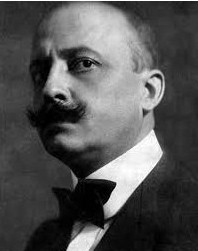
Filipo Tommaso Marinetti 1876 – 1944. Unfortunate politics and inspiration behind the “ZTT” record label.

Liam disrupts assumptions of the passivity of listening, implicit in sonic treatments of violence, when he evokes Jacques Lacan informing his students that the “ears have no lids” (I had always thought it was Carpenter and McLuhan). His analysis of Trump’s mobilisation of support implicates the listener-as-actor, their participation every bit as central to decoding Trump’s subverbal inarticulacy in the creation of what Hegarty terms a “spectacle of listening” (2021). Given the current state of world politics and the rise of the right, it has rarely been more important to attempt to account for the popularity of leaders like Trump and the violence they espouse. Gillespie’s work invites us to forensically dissect Trumps seeming inarticulacy and the rousing appeal that lies beyond, and beneath, mere words, to account for how sound works to mobilise the power of the collective. Amanda and Sian underscore the potency of silence as a tool for victimisation in their account of the role of silencing in gender-based violence. Here, power is mediated through the repression of voice, rather than being mobilised in resistance to it. Amanda and Sian demonstrate how sound is both a site of, and tool for, gender-based violence while sometimes providing the keenest indication of its existence, despite often being overlooked. Not only does verbal aggression often provide an indication of the existence of other types of abuse, but “the voice itself is a tool of violence, causing immediate and long-term harm”. Together these contributions enhance our understanding of the flows of power, and how voice can be harnessed as a tool for violence.

Colm powerfully argues that sound is a crucial element of the experience of violence in conflict-affected areas of Ireland. Like Amanda and Sian, he maintains the need for an increased auditory focus as a means of better understanding the impact of violence. While Colm’s account of paramilitary experience in Ireland makes various references to inter-personal exchanges, his focus more broadly is on the multiplicity of ways in which violence and its sensescape was interwoven into the fabric of everyday life – particularly in 80’s Belfast, a fraught time in which sectarian violence featured heavily. He speaks evocatively of the soundscapes of the time; car sirens, crackling fire, gunshot, but also of the eerie silence that followed. For Colm, the sensory imposition of paramilitary activity informed his sense of West Belfast as a place, the effects and affects of violence reverberating long after the ceasefire, informing his sense of space, place and identity. His work emphasises the instructive potential of sound as a means of understanding how power operates, but also how sound is implicated in various strategies to provoke, disempower, repel and entice those subject to violence.

Sound, and the sensory more broadly, attune us to the lasting impacts of violence. Colm’s analysis of interview data demonstrates how sound “catalyses memory and can create the conditions for trauma” reminding us too, that trauma has sensory components. Hannah’s work most specifically and extensively deals with this aspect of violence. Her focus on the experience of soldiering in Afghanistan and Iraq considers how photo and object elicitation facilitated the transition from speaking about familiar things to their “visceral recollections of seeing, hearing, smelling, tasting and touching death in war”. She argues better accounting for the sensory deepens our understanding of the enduring effects of colonial state violence but also offers the capacity for repair and resistance. Hannah draws on Hockey’s (2020) work to argue that smell is a “core site of survival and suffering”. These assessments echo the testimony and vivid recollections of those she interviewed, who recalled the sensory afterlives of their memories of war and loss with a potency reflecting their endurance. As Liam, Hannah and Kanupriya reflect “the violence they perpetrated and witnessed was not abstract. It lived in their muscles, their hunger, their sleep and their everyday living.

Together, these pieces demonstrate the importance of more closely attending to the sensory politics of violence whether inter-personally, nationally or internationally – specifically with reference to colonial legacies of violence and trauma. In “Listening to war” Martin Daughtry (2017) speaks of the importance of developing a phenomenology of violence. These contributions demonstrate the necessity of not only deepening our understanding of subjective experience but also of extending this to account for intersections between subjective experience, mediations of power and its cultural significations and the sensory afterlives of violence. Whether it is the physical qualities of sound, its inescapability when under siege or its pre-eminence – relative to other senses, excluding sight – in the Western aesthetic that account for its dominance in much of this section, each demonstrate the centrality of the sensory to experiences of violence. From the suffocation of gender-based violence to considerations of the sense-legacies of colonialism, each chapter hums with the vivid, theoretical potentials of incorporating a sensory approach. One that is resolutely multidisciplinary, creative, culturally attuned and intrinsically human.

Some questions:

Is there something about the sensory that encourages a corresponding concern with ethics?

If so how, and what might the implications of this be?

How does the sensory lend itself to innovative methods?

What are the limitations of this?

Why does sound lend itself particularly well to discussions of violence?

What are the creative possibilities of foregrounding the sensory in research on violence?

What solutions might be offered for undergraduates looking to adopt sensory approaches, but struggling to think of ways to navigate increasingly restrictive ethics policies?

What might Alison Young have meant by her call to “listening criminologically” (2023)

References

To cite this blog: Herrity, K. (2025) December 1st, 2025 “Introducing… Sensory Politics of Violence” www.sensorycriminology.com

To cite the book: Herrity, K., Sharma, K., Umamaheswar, J., Warr, J. (2026) The Routledge International Handbook of Sensory Criminology. London: Routledge

Birdsall, C. (2012) Nazi Soundscapes: Sound, technology and urban space in Germany, 1933 – 1945. Amsterdam University Press – published through OPEN ACCESS PUBLISHING IN EUROPEAN NETWORKS: https://library.oapen.org/handle/20.500.12657/34484

Goodman, S. (2012) Sonic warfare: Sound, affect and the ecology of fear. MIT Press

Gough, P., Davies, K. (2017) ‘Dead Air’: the acoustic of war and peace – creative interpretations of the sounds of conflict and remembrance in Saunders, N., Cornish, P. (2017) (eds) Modern Conflict and the senses. London: Routledge

Hegarty, P. (2021). Annihilating Noise. Bloomsbury Academic Press, New York, NY.

Hockey, J. (2020) ‘Sensing regimes of war: Smell, tracing and violence’, Security Dialogue, 51 (2–3): 155–173.

Martin Daughtry, J. (2017) Listening to war: sound, music, trauma and survival in wartime Iraq. OUP USA

Moshenka, G. (2017) Moaning Minnie and the Doodlebugs: Soundscapes of air warfare in Second World War Britain in Saunders, N., Cornish, P. (2017) (eds) Modern Conflict and the senses. London: Routledge

Mrozek, B. (2024) (ed) Sensory Warfare in the Global Cold War: partition, propaganda, covert operations. Pennsylvania: Penn State University Press.

Neidhart, C. (2002) Russia’s Carnival: the smells, sights and sounds of transition. London: Bloomsbury

Saunders, N., Cornish, P. (2017) (eds) Modern Conflict and the senses. London: Routledge
Categories
Environment police power prison probation research Research methods sensory Uncategorized

International Handbook of Sensory Criminology Series: 1

Introducing… Sensory Criminology: Expanding the Criminological Imagination

This short post marks the opening of a series dedicated to discussing each of the organising themes of the Routledge International Handbook of Sensory Criminology, in preparation for its launch. Each piece will leave comments open as an experiment in discussion. Please feel free to leave talking points or ask questions – we particularly welcome questions from students.

The book asks what the sensory can contribute to our understanding and pursuit of criminological inquiry? What might the value be, of attending to the sensory in social scientific and criminological investigation? What do we even mean by “the senses”? Conventionally thought of as being restricted to sight, sound, smell, touch, taste – and often laid out in that hierarchy – what happens if this is extended to include a broader range of perceptual stimuli? What happens to how we can utilise a sensory approach to criminology if we add clarity, distinguishing it from adjacent, but distinct, theoretical frameworks adopted by phenomenological and affective perspectives? How can we think about violence and its politics, how coloniality and imperialism frame our understandings of justice and punishment, narrative and the arts in the context of criminal justice – and its absence, Environmental harm and how criminal justice practices impose particular understandings of place, space, time and justice, and how the sensory can inform methodological approaches to the rapidly changing contours of criminology and society.

The handbook is dedicated to expanding these ideas and considering how developing a set of principles to guide our approach to sensory criminology works to allow for a deeper consideration of implications for decolonial thinking. This enhances capacity, we argue, for disrupting western empirical hierarchies and the social systems they both shore up and are reinforced by. The book aims to amplify voices and experiences from beyond the Global North and to expand the possibilities of our criminological imagination.

CONTENTS

Sensory Criminology: Expanding our Imagination   Kate Herrity, Kanupriya Sharma, Janani Umamaheswar, Jason Warr

Section 1: Sensory Politics of Violence

Sensing Violence: Traces, Echoes, and Afterlives Liam Gillespie, Kanupriya Sharma and Hannah Wilkinson

  1. Listening to Donald Trump’s Voice: ‘Fight like hell!’, the Capitol Hill Riots, and the Spectre of Teleprompter Trump Liam Gillespie             
  2. ‘SHUT YOUR FUCKING MOUTH’: Sound, Silence and Gender-Based Violence Amanda Holt and Sian Lewis
  3. The Sound of Violence: Paramilitary experience in Ireland Colm Walsh
  4. War, Colonialism and the Senses: “You can’t unsee or unhear that shit” Hannah Wilkinson

Section 2: Coloniality, Imperialism, and the Senses    

Recognising Abhorrent Legacies: Lessons for Sensory Criminology Onwubiko Agozino, Rose Boswell, Nontyatyambo Pearl Dastile, Sharon Gabie, Andrew Kettler, Macpherson Uchenna Nnam, Jessica Leigh Thornton, and Jason Warr

  1. Doing Justice Differently: A Pan-Africanist Perspective Nontyatyambo Pearl Dastile, Abiodun Omotayo Oladejo, and Macpherson Uchenna Nnam                 
  2. “I’ll Make You Shit!”: Olfactory Othering and the Necropolitics of Colonial Prisons Andrew Kettler 
  3. The Sensory Aspects of Abhorrent Heritage in South Africa Rosabelle Boswell, Jessica Leigh Thornton,  Sharon Gabie , Zanele Hartmann,  and Ismail Lagardien
  4. Decolonizing Sensory Rhetorics and Activism in Africana Prison Memoirs Onwubiko Agozino

Section 3: Sensory, Narrative, and the Arts         

Reimagining Justice through Creative Encounters and Sensory Knowing Glenda Acito, Lucy Cathcart Frödén, Fangyi Li, Lorenzo Natali, Nabil Ouassini, Kanupriya Sharma, Ozlem Turhal, and Raghavi Viswanath   

  1. Black light. Drawing, Music and Theatre as Sensory Practices in the Encounter Between Inmates and University Students Lorenzo Natali , Glenda Acito, and Ozlem Turhal 
  2. Crackle and Flicker: Music and Multisensory Experiences in Prison Lucy Cathcart Frödén and Áine Mangaoang       
  3. Seeing Museums as Criminological Spaces: An Affective Tale of Two Museum Visits Raghavi Viswanath and Fangyi Li
  4. ‘Sensory Criminology, Islamic Auditory Traditions, and Rehabilitation Nabil Ouassini and Anwar Ouassini                          

Section 4: Sensing (In)Justice        

From the Courtroom to the Street: The Sensory Dimensions of Racialised (In)justice Barbara Becnel, Dale Spencer, and Jason Warr

  1. Conflicting Senses, Victims, and the Courtroom: the case of Cindy Gladue Marcus Sibley and Dale Spencer    
  2. The Sensory Effects of Racial Profiling in Berlin’s KBO’s.  Melody Howse                          
  3. Racialized Punishment and the Sensorial Symbolism of Death Row for America’s Black Gangster Class Barbara Becnel             

Section 5: Environmental Harm and the Senses            

“The Way the Soil Crumbled in Their Hands”: Sensing Environmental Harms Amy Gibbons, Ascensión García Ruiz, Janani Umamaheswar, and Aysegul Yildirim

  1. Seeing and Sensing Environmental Harm: The Death of the British Countryside Amy Gibbons                 
  2. The Sensory Ocean: Exploring Noise and Light Pollution as Blue Crime Ascension Garcia-Ruiz
  3. Sensitising Criminology to Experiences of Environmental Noise Aysegul Yildirim

Section 6: Space, Place, and the Sensory           

Vivid and Vibrant Criminological Landscapes: Sense and Space Kevin Barnes-Ceeney, Priti Mohandas, and Janani Umamaheswar

  1. Dispossessed Realities: Houselessness, and Spatial Violence Luisa T. Schneider
  2. Release from Prison Day Kevin Barnes-Ceeney and Victoria Espinoza                        
  3. “I can’t breathe” Housing, Masculinities and Violence in Cape Town, South Africa Priti Mohandas
  4. Scrutinising Social Control in the City through the Senses Anna Di Ronco and Nina Peršak      

Section 7: Time, Justice, and the Sensory

Beholding Justice and Punishment Sneha Bhambri, Eamonn Carrabine, Kate Herrity, Arta Jalili-Idrissi and Jason Warr

  1. Sitting, Seeing and Getting Lost: The Sensory Aesthetics of Latvia’s Women’s Prison Arta Jalili-Idris
  2. Time, Temporality, and Chronoception Jason Warr
  3. It’s a Circus: The Production of Domestic Violence Proceedings in Lower Courts of Mumbai, India Sneha Bhambri
  4. Beholding Justice: Images of Punishment in Medieval and Early Modern Europe Eamonn Carrabine

Section 8: Sensory Methods

“They Are Not Like You and I”: Sensory Methods  Briony Anderson, Kate Herrity, Sarah Kingston and Mark Wood

  1. Sense and Insensibility: How Technologies Invite and Invisibilise Harm Briony Anderson, Mark A Wood, Jackson Wood, Will Arpke-Wales, and Flynn Pervan             
  2. Audio Criminology: Broadening the Criminological Imagination Through the Use of Audio Methods Sarah Kingston
  3. ‘Still feels like jail’: Sensing Danger, Bleakness and Friendship in a State-Run Home For Boys Mahuya Bandyopadhyay, Aishwarya Chandran and Sanjukta Manna

This project began life as a conversation between Tom Sutton and I (Kate Herrity) at the 2022 BSC conference. Shortly after, Kanupriya Sharma, Janani Umamaheswar and Jason Warr joined. The four of us divided up the eight sections which organise the book. Each of the authors of the three or four chapters within them were invited to take part in a discussion with one another about their work. These discussions formed the basis for each introduction section of the book. Since these sections are an accessible way of introducing the contents of the book in a way which lends a substantial project a coherent narrative, they seem like a sensible focus for discussion.

As with all projects, people decline and others drop out, representation is partial, interests and approaches of the editors are reflected in those invited to participate… We discuss all this at greater length and depth in the introduction, along with our hopes for the future and the guiding ethos of the book. We hope to invite more people to the table and enrich a conversation we do not aim to be the last word in.

Categories
Interviewing research space Zoom

Zooming in: shifting time, space and distance

Anna Kotova

In mid-2020, my small, city-centre studio apartment became not only my lecture theatre and seminar room, but also the space where I conduct my research. I am, at time of writing, researching the use of video-call technology in prisons in England and Wales, looking specifically at how this is experienced by families of people in prison. This technology – an app called Purple Visits – was designed specifically for prisons with the necessary security features, but at its core it allows people in prison and their families to video-call in a way that has become increasingly familiar to many of us during COVID-19.

In a peculiar twist of fate, I have only been able to conduct interviews using either Zoom or the telephone. The original research design, mapped out prior to the start of the pandemic, would have involved me meeting with research participants face-to-face. So, whereas I would normally spend hours travelling to the interviewees, the research participants and I now enter each others’ homes, albeit virtually.

For those who opt for Zoom with the video on, this is all the more true. They can see my kitchen, the gin bar behind my shoulder, hear my neighbour’s dog (the bane of my current confined existence) barking next door to me. Likewise, I am able to see the research participants’ homes. At times, this helps build rapport – some show me their pets, their living rooms, or other items they are talking about during their interview (for example, one interviewee displayed the artwork she shared with her incarcerated loved one on their video-call and another her home office). Recently, an interviewee showed me the photos of her imprisoned sons. In another interview the interviewee’s teenage child was sat next to her and I could hear the young woman’s voice in the background. This would not have been possible were we sat in a community centre or office, and adds an additional dimension to the interviews.

There is also a sense of ease and comfort to these interviews, which, upon reflection, was unexpected for me as a researcher. In ‘normal’ times, these would be held in a private office, community centre, or a function room of a pub or cafe. We would be surrounded the hubbub and sensory intrusions of everyday life – the smells of coffee, the noises of doors shutting, even interruptions of someone knocking on the door or needing to pick something up from the room we were in. It would also be a neutral space with a sense of “official research interview” to the meeting. I would be dressed in work clothes, for example, and have my hair and makeup done. Online interviews are arranged (when possible) at a time when participants are mostly in a quiet and totally private place so there was very littlebackground noise. Likewise, I live alone, so there is very little interruption (noisy dog notwithstanding).

It is peculiar how the dynamics change when one is sat in their pyjama bottoms, in one’s own living room. Or, if the interview is on the phone, lying on the sofa or bed with my eyes closed, recovering from what is usually an exhausting day of teaching and marking. Even on video-calls, I am usually dressed in lounge or sports clothes rather than business attire. For me, the experience becomes an informal conversation, the sort of chat we have become so accustomed to during COVID-19 lockdowns. I become an over-worked academic in a similar situation to the stressed participants, who are often juggling work and childcare and supporting someone in prison. The researcher-participant hierarchy feels, to some extent, flattened for me – though of course I am aware that this might not be the case for those I interview. For instance, most appear on Zoom video calls dressed in what seem to be “work clothes”, and so might experience the interview as more formal than I do. Nonetheless, there is a sense of togetherness I seek to create via chats about lockdowns and COVID-19 and other topical issues (currently, this is vaccination in prisons!).

The sense of ease and the familiarity of one’s own setting helps most of the interviews to flow easily, with participants sharing their experiences openly and candidly. Those on Zoom are able to illustrate how they would stay still during a prison video-call, or show the backgrounds they use to ensure the call goes smoothly. This is because the technology can glitch or stop the call if portraitss or photographs are visible, or even if the caller’s head moves too much. This enables me to see exactly how the interviewees conduct themselves on a prison video-call – via them briefly reeancting the experience for me on a Zoom call – a fascinating experience which would not be possible offline (because I would not see the backgrounds, the framing of them on the screen, etc.).

Despite the positives, I wonder about the conflation of research and home. It is at times difficult to detach after the interviews, in a way that I might have done taking the train back after meeting with a participant. I would occupy myself with getting home, buying food, settling down for the evening. When one’s trip back is the few steps from the desk to the sofa, the interview lingers. It stays, intangibly, within my tiny studio apartment, the words of the interviewee lingering much longer in my mind as I reflect on what we have discussed. Since lockdown means very little sensory and experiential distraction – no trains to rush to, no adverse weather to be annoyed about – there is more headspace for the interview to occupy my mind after the event.

I am certain that remote interviewing is here to stay, at least for the foreseeable future – and it is undoubtedly beneficial for those who have accessibility needs or for whom there are other reasons why a Zoom interview might be easier, practically and/or emotionally. Nonetheless, we need to be careful and consider the ethics of ‘entering’ someone’s home, albeit virtually. I do not know whether I linger with the participants after the interview, but there is no reason to suggest why this would not be the case for participants as well as the researcher.

Interviewing during a pandemic, thus, raises some interesting questions about power its fluidity in research. To some degree, inequalities are flattened because participants can choose what they show me, where they are located (for example, they can choose a white wall rather than a place where I would be able to see much of their room). They can even choose for me to not see them or their home at all if they opt for a phone call. On the other hand, I as a researcher still enter their home environment to some extent, albeit indirectly. Morever, it is possible that my perception of power inequalities flattening is heightened because I am used to conducting research interviews and therefore am comfortable with lying down and conducting a phone interview from my bed! For participants, this may not be the case – this might be the very first time they have taken part in research. Ultimately, the choice should rest with the interviewee.


Categories
Emotions research space

A sense of home in prison?

Annie Bunce

When I sat down to write about my sensory experience in prison I hesitated. I have a lot of rich data from my participants describing their sensory experiences, which have greatly enhanced my knowledge and understanding of the prison environment. But my sensory experience? Having not spent extended periods of time in prison, I wasn’t sure I had a right to claim any significant sensory experience. During my first and most significant experience of prisons research, I spent approximately one year going in and out of four UK prisons interviewing prisoners who were participating in a rehabilitation programme, BrightHorizons, which was the focus of both my PhD and a wider evaluation study. Throughout these interviews I focused closely on what my participants said to me, and I have always considered the stories I heard to be the main source of my own knowledge and understanding. However, when I looked over my fieldnotes and data and reflected on my experience, I was hit with an avalanche of sensory memories. I realised that the sounds and tactile experiences that I had been surrounded by whilst in the prisons had hugely influenced my interpretation and understanding of my participant’s accounts of their experiences of prison and the programme.

BrightHorizons was a dual-purpose initiative that brought groups of at-risk young people into the prison estate and trained teams of prisoners to deliver interventions to them, with the aim of diverting young people away from the criminal justice system and supporting prisoners’ rehabilitation. The programme was delivered in four Cat C/training prisons in South-East England (three men’s, one women’s), with a designated space for the programme to run within each prison. This consisted of the main programme room where all the action happened, a kitchen area and/or office, and a toilet. Two prisons had their own separate portacabin, whilst the other two had designated areas within the main prison. I interviewed prisoners in either the kitchen or office, with the door shut and a view through a small window into the main room.

I was struck by how the sensory experience in the privacy of the interview space was sharply juxtaposed with that in the adjoining room, where the rest of the team were training. The presence and absence of sound and touch was particularly profound and are the focus of this blog post.  

Sound and its absence

I always arrived at BrightHorizons to a cocktail of sounds. There were usually between seven and ten men or women in the room, but it sounded like a far bigger group. There was layer upon layer of different sounds, which got invariably louder as each of the participants clamoured to be heard. Somebody would tell a joke and the room would rumble with laughter, there was a constant stream of what was popularly referred to as “banter”, hands slapped together in high fives and every now and again somebody would break into song or start rapping.If I closed my eyes I could have been standing in a school at playtime, or amongst a group of friends at a festival. I suppose such a lot of noise from a group of near strangers in an unfamiliar environment could have been intimidating, but instead all of these sounds bubbling over one another put me at ease.

Inside the interview room, however, it was the absence of sound that made the most noise. Participants spoke softly and slowly and there were regular, long silences as they considered their answers. The tone of the interviews was mixed- words dripped with sadness and regret, sighs were heaved and voices wobbled and cracked as participants spoke about their past. And then the tone would lighten, become animated and eager, and laughter would be shared as they regaled stories of their families, their time spent on BrightHorizons, and their hopes and dreams for the future. At times the tone was more serious- words carefully chosen, measured (other than the odd expletive!) and laced with frustration, as they reflected on the dark side of being in prison and the less positive aspects of the programme. Throughout the dynamic tones and relative quietness of the interviews, the constant muffled sound of laughter and banter could be heard from the main room- which felt like a reminder of the relief that the group atmosphere provided in the context of such complex individual life stories (Collica, 2010; Marshall and Burton, 2010).

Touch and its absence

Touch is one of the most essential elements of human development, a profound method of communication… and a powerful healing force.” (Bowlby, 1952)

Something that struck me straight away when spending time at BrightHorizons was the centrality of touch in prisoner’s interactions. Stereotypical depictions of the prison centre on iron bars, high razor-topped fences and heavy metal doors, which connote a physical separation, isolation and coldness antithetical to tactility. Touch in prison can be a ‘taboo’ (Houston, 2009). The BrightHorizons space was filled with high fives, back slaps, hugs, fist bumps and handshakes. Touch was obviously a vital aspect of participant’s interactions, and it strikes me as I write this how deeply people in prison must be missing such sensory experience during the current Covid-19 lockdown (Douglas et al., 2020). But it wasn’t just about touching and being touched by others. One warm and sunny day when I was interviewing at the women’s prison, I sat outside the portacabin with the women on the surrounding field at lunchtime, feeling the grass between our toes and the sun on our faces. This felt quite significant for me, as I felt a little bit less of an outsider. From my fieldnotes:

“M popped in while I was writing and said they were sitting in the sun for a bit and I was welcome to join them nice to be involved as can feel a bit awkward when just hanging around not sure where to plonk myself.”

If I closed my eyes I could have been in a garden or park. None of the men’s prisons had green outside space, and this example highlights the differences in sensory experience depending on the specific prison environment the men and women were in. When I asked Anthony what he was most looking forward to upon release he said:

                 “Four and a half years behind a door, just get a bit freedom, even just to do a walk, like I don’t know, walk on some grass or something (laughter).”

Within the realm of the interview touch was far less salient. I sat opposite participants, with a table where the audio recorder was placed physically separating us. Generally, this physical space felt appropriate and comfortable, and did not appear to impede rapport or interview depth. Male participants, particularly, appeared conscious of maintaining boundaries, and were outwardly apologetic and embarrassed if they felt these had been crossed. For example, from one interview:

I:               Okay, that’s interesting, thank you.  So, a little bit about the future now, so you said your parole’s pretty soon –

R:             Sorry –

I:               – that’s okay (laughter).

R:             – I’m playing footsie with you under the table (laughter).  Sorry (laughter).

I:               That’s okay, that’s alright.  So, parole is due relatively soon did you say?

When interviewing female participants the absence of touch felt more palpable. Perhaps due to the shared experience of being female and increased relatedness and empathy associated with this. The interviews with the women were generally of a more emotional nature and I often felt the need to physically comfort them. I felt torn between maintaining professional and ethical boundaries, which made me feel that it would be inappropriate to hug my participants, and responding with care, which made me feel guilty for not huggingthem, as this felt like the most intuitive response to a human being in distress (Dickson-Swift et al., 2007; Cowburn, 2010). I did my best to communicate care, compassion and empathy through my voice and eyes. From fieldnotes:

 “Most harrowing interview yet- she cried at one point and I very nearly did on a few occasions. When she cried I didn’t quite know what to do as was the first time it had happened- she carried on talking and seemed like she wanted to finish what she was saying so I got up and got her some tissues but didn’t interrupt what she was saying and then she kind of pulled herself through it. I wanted to hug her at the end and tell her how amazing she is but I knew that would be inappropriate, so I complimented her on her English (which she was clearly self-conscious about) and wished her all the best instead.”

Concluding thoughts

Tuning into the senses helped me to understand the importance of the programme space in terms of providing sensory and physical stimulation that my participants did not generally experience anywhere else in the prison. This contributed to one of my most dominant findings, that BrightHorizons provided participants with a sense of home. BrightHorizons appeared to function as a sort of sensory bubble. Having somewhere to go where they knew they could relax and unwind gave them the space to recover from general tiredness induced by the prison environment, detracted from the stresses of daily prison life, and made it easier to deal with the rest of the prison (see also Stevens, 2012; Frank et al., 2015):

“it was very like a home, not a home but it’s like a home within prison if you understand what I mean, a go to place to escape sometimes”. (Keira)

Having a space perceived as ‘theirs’ and access to a few ‘home comforts’ seemed to have provided prisoners’ with a community of their own (Stevens, 2014; see also Lloyd et al., 2017), away from the “absolute chaos” (Jonathan) of the rest of the prison:

“To tell you the truth, since I’ve come to BrightHorizons I don’t even think about the rest of the prison.” (Marvin)

But it also occurred to me that there is an element of a sort of sensory time/space trap. Due to the highly structured nature of BrightHorizons and predictability of the prison rules and regimes that programmes are bound by, these sorts of sensory experiences seem likely to lose their significance eventually, as they risk becoming as monotonous as the rest of the prison. This was reflected in my finding that participants who had spent some time on BrightHorizons had found themselves less stimulated and were pursuing other experiences alongside it. Yet they all carried on participating, because groups of youngsters and professionals visiting every week added a much-appreciated element of spontaneity and meant no two weeks were identical. This underscores the importance of people in prison being able to interact with a diverse group of people- including staff, family and friends on the outside, and fellow prisoner- and participate in various creative activities to provide ongoing growth and learning via sensory experience (Houston, 2009; McNeill et al., 2011).

Bowlby, J. (1952) Maternal Care and Mental Health: A report on behalf of the World Health Organisation. Geneva: World Health Organisation.

Collica, K. (2010) ‘Surviving incarceration: two prison-based peer programs build communities of support for female offenders’, Deviant Behavior, 31(4), pp. 314–347. doi: 10.1080/01639620903004812.

Cowburn, M. (2010) ‘Principles, virtues and care: ethical dilemmas in research with male sex offenders’, Psychology, Crime & Law, 16(1–2), pp. 65–74. doi: 10.1080/10683160802621974.

Dickson-Swift, V. et al. (2007) ‘Doing sensitive research: what challenges do qualitative researchers face?’, Qualitative Research, 7(3), pp. 327–353. doi: 10.1177/1468794107078515.

Douglas, M. et al. (2020) ‘Mitigating the wider health effects of covid-19 pandemic response’, BMJ, p. m1557. doi: 10.1136/bmj.m1557.

Frank, V. A. et al. (2015) ‘Inmates’ perspectives on prison drug treatment: A qualitative study from three prisons in Denmark’, Probation Journal, 62(2), pp. 156–171. doi: 10.1177/0264550515571394.

Houston, S. (2009) ‘The touch “taboo” and the art of contact: an exploration of Contact Improvisation for prisoners’, Research in Dance Education, 10(2), pp. 97–113. doi: 10.1080/14647890903019432.

Lloyd, C. et al. (2017) ‘A short ride on the penal merry-go-round: relationships between prison officers and prisoners within UK Drug Recovery Wings’, Prison Service Journal, 230, pp. 3–14.

Marshall, W. L. and Burton, D. L. (2010) ‘The importance of group processes in offender treatment’, Aggression and Violent Behavior, 15(2), pp. 141–149. doi: 10.1016/j.avb.2009.08.008.

McNeill, F. et al. (2011) ‘Inspiring desistance? Arts projects and ‘what works?’’, Justitiele Verkenningen, 37(5), pp. 80–101.

Stevens, A. (2012) ‘“I am the person now I was always meant to be”: Identity reconstruction and narrative reframing in therapeutic community prisons’, Criminology and Criminal Justice, 12(5), pp. 527–547. doi: 10.1177/1748895811432958.

Stevens, A. (2014) ‘“Difference” and desistance in prison-based therapeutic communities’, Prison Service Journal, (213), pp. 2–9.

Categories
prison research self-harm Touch

Close, closer

Kate Herrity

It is a prisoner who informs staff that Stevie has cut himself: “He’s pouring blood. It’s all over his cell floor. Someone needs to go see him”. He informs several members of staff, talking to all and no one in particular. Catching my eye. His own arms criss-crossed with self-inflicted cuts. Shallow but plentiful. We discuss this at another point, comparing scars and patterned welts on limbs offered up for scrutiny. Puckered scar tissue re-opened. “Why?” asks an officer. “I don’t know, I feel strange” he says. He makes his wound talk for me, squeezing his separated flesh together to form oozing lips. “Hello” he says in a high-pitched voice, laughing, whether at my discomfort or his own macabre delight I can’t tell. I tell him to remove his grubby blood-coated fingers from the undressed wound. When he’s moved to the observation cell his hand appears between glass and wall waving, calling me for attention. I realise, painfully, I can’t respond to it… I tell him I can’t. “come talk to me..”. I can’t. (fieldnotes)

The discomforting collapse between public and private spheres of life within the total institution is a familiar theme in prison sociology. Goffman devotes significant passages of asylums[1] to describing the sensory experience of being at such enforced close quarters with other human beings in evocative and discomforting detail. Dwelling on the emotional labour of navigating the traumatic and intimate spaces of prison alongside those who live and work there runs the risk of lapsing in to self-indulgence. What these embodied aspects of social experience have to tell us about life in carceral spaces, however, warrants further exploration.

Davey – battling his own demons in this regard – expresses irritation about the imposition on me. Characterising self-harm as largely a bid for attention, his implication is that forcing me to bear witness to their injuries is both ill-mannered and manipulative. A gruesome display designed to shock and upset. It is uncomfortable being subject to this grotesque power play, with all the meagre opportunities for exercising autonomy and control it extends to those engaging in it. Leaning in to my discomfort and assuming the role of emotional mark[2], is instructive in a multiplicity of ways. I do not mean to imply a cold cynicism on the part of those in distress and self-harming, but rather to indicate the complexity and nuance of meanings assigned to behaviour in this most particular of spaces. There is a brutal, enforced intimacy to bearing witness as someone deliberately cuts their flesh. Usual divisions between public and private do not apply in these spaces shaped by intrusive echoes, unsanitary smells and sharp, cold, grubby edges.

There is a paradox too, between this unbidden, searing intimacy and the necessary suppression of my impulse to tend to his wounds, to offer physical comfort. In the absence of gloves and, frequently, trained nursing staff wounds are not dressed or cleaned by anyone. Rules meant to safeguard health and safety impose a jarring distance. Added to this, as an outsider and a woman I cannot touch the men. The unspoken veto on physical contact of the most fleeting and friendly variety makes me keenly aware of my tactility as well as the perceived riskiness of my femaleness. In order to observe the rules and rituals of this place I must subvert my own ethical impulses and stew in the haunting helplessness this imposes. This is where the potency of my powerlessness rests. I must see and feel but cannot act or aid. Proximity takes on additional force here too, and when I spend a night here, I feel the loss of companionship of everyone behind the door.

A prisoner has hurt himself, bleeding profusely. He is moved to a neighbouring cell where he continues to harm himself. His blood spatters the observation hatch and breaches its barrier, dripping down the outside. Abandoned belongings, soiled and bloody lie piled on the spartan floor of the ruined cell which awaits the sluggish attentions of tomorrow’s orderlies. “You might as well see it all if this is what you’re here for”, says an officer, inviting me to join. He retreats along the spur and re-emerges zipping up a shocking white hazmat suit. Staff retch as the smell of blood, warmed by the summer heat, reaches their noses. He refuses care and remains conscious. A trip to hospital would leave two remaining staff. Not taking him anyway will mean additional anxiety for the familiar ritual of the morning count. To much relief he accepts a sugary cup of tea, a breakfast pack having been sought out and fetched in an effort to replace some fluids. He settles, and our footsteps withdraw from their clustering around his cell. Customary routines are resumed (fieldnotes).

Sudden, visceral violent confrontation was ameliorated with cups of tea. The female senior officer and I laughed at ‘hazmat’, as much for the inadequate barriers against such brutally infectious despair offered by its flimsy material as for the unintended statement of excessive cautiousness it represents. My laughter though, was doing more work than I acknowledged at the time. He too was asking for my discomfort, just as Stevie had done, in challenging me to “see it all”. My greater reluctance to assume the mark for him, rooted in my assessments of the asymmetry of power between officer and prisoner, amplified the distinction between my perspective of his position and his own. He too, wanted me to bear witness. These instances were not isolated but rather part of a broader range of interactions in which I was invited to hear, see, smell, touch, feel and in so doing transport these visceral impressions with me to breach the walls. There is something in these fleeting and uncomfortable encounters which tells us about the social relations between the closed spaces of the total institution and the outer community from which its realities are largely concealed. Our rigid, creeping, ethical practices reinforce the assumption we outside observers occupy positions of power. Our utility and effectiveness may conversely lie in our willingness to shed it.


[1] Goffman, E. (1961) Asylums: essays on the social situation of mental patients and other inmates. St Ives: Penguin

[2] Goffman, E. (1952) “on Cooling the mark out: some aspects of adaptation to failure” Psychiatry Vol.15, no.4 pp451-463. This is not to suggest a ‘fraud’ is being perpetrated, but rather to draw some similarities between this emotional power play and the conditions on which a successful confidence trick rely, namely emotional investment.