Cosimo Sidoti
Music and psychoactive substances have always gone hand in hand. Their relationship has been embedded in cultural practices since the earliest expressions of human creativity. This music and drug nexus extends beyond the representational domain where drug references appear explicitly in lyrics or visual portrayals. More critically, it operates within a non-representational register, wherein the sonic, visual, and lyrical dimensions of music converge to evoke a multisensorial experience that approximates, simulates, or enhances the embodied sensation of drug consumption and intoxication. It is this immersive capacity to affectively and sensorially reproduce drug experiences that underpins the deeply symbiotic relationship between music and drug cultures. Reggae and cannabis, psychedelic rock and LSD, acid house and ecstasy are some of the most well-known cultural entanglements – both within and beyond academia. Yet, one of the most enduring and tightly interwoven nexuses, though rarely foregrounded in scholarly literature, is the relationship between hip-hop music and lean.
Lean, also known as purple drank, sizzurp, mud, dirty sprite, or even liquid heroin, as commonly referred to in many songs, is a mixture of codeine-based cough syrups and fizzy soft drinks. It resembles the visual appearance of a cocktail where the active ingredient is codeine, a weak opioid that, when used non-medically or recreationally, falls under the broader category of ‘downers’ – psychoactive substances known for their sedative effects. It typically induces a sense of euphoria and inner warmth, making users feel relaxed, chilled, and sleepy. Its spectacularisation through hip-hop music has contributed to the development of lean culture that sinks its roots among African American communities in the Southern United States in the early 1990s. This culture has since been transmitted, imitated, and adapted globally, transcending its meaningful socio-economic and political context of structural inequalities, and illustrating its global allure and affective resonance far beyond its origins.
The birthplace of lean can be traced back to Houston, Texas, where it became closely associated with the local hip-hop scene in the 1990s. At the heart of this cultural emergence was the iconic Houston-based hip-hop artist DJ Screw who pioneered a specific hip-hop music genre known as Chopped and Screwed (or Screwed and Chopped) that consisted of remixing hip-hop records by slowing down their tempo (Walker, 2022). Although DJ Screw’s legacy expands far beyond lean as he revolutionised the future of hip-hop music as we know it today, his unique music has often been described as sounding tailor-made for the experience of being high on lean as suggested by DJ Screw himself in one of his tape albums released in 1995 (see Image 1). Just as the music seems designed to be experienced while high on lean, the drug itself feels as though it was made to inspire and create this sound.
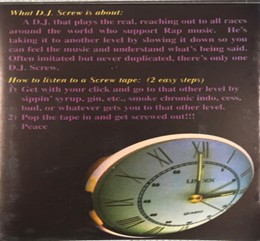
The defining characteristic of the Chopped and Screwed sonic aesthetic – blending with the experience of lean – lies in its ability to distort the listener’s perception of time. This temporal disorientation is evoked through slowed-down tempos, stretched-out vocals, and repetitive looping, all of which encapsulate the dissociative, slowed-down, and relaxing sensations associated with being high on lean. Over time, this distinctive sound alongside the use of lean and its (more-than) representations was taken up, reworked, and evolved by a range of music artists into other hip-hop music genres such as trap, drill, and SoundCloud rap (as well as some of their subgenres, such as Rage, Plugg, and so on). This also extended into entirely new music genres beyond hip-hop music such as Vaporwave, emerging in the early 2010s. These sonic elements were further transformed through digital reproduction, incorporating lo-fi techniques, synthesisers, and autotuned vocals that made an even more distorted and imperfect sound. Moreover, as the time of DJ Screw’s cassettes soon passed, these sonic elements were fused with visual aesthetics through music videos consisting of wavy, slow-moving effects and purple[1] hues that not only enhanced this temporal disassociation but also introduced an ambiguous spatiality, inducing a dream-like feeling and atmosphere in which everything seems to float – detached from any concrete sense of place associated with lean.

The symbolic markers of lean as represented in many music videos – including both its main ingredients as the cough syrups and soda bottles, and its paraphernalia as double stacked cups[2] and baby bottles[3] – are often more than represented through these visual effects that appear as surreal and hallucinatory. Therefore, the auratic properties of lean as evoked by the audiovision of such types of music draw viewers into immersive and sensory atmospheres. Many of my interviewees within lean culture recalled their first social encounters with lean through hip-hop music videos not merely as moments of recognition but as affectively charged experiences where the “coolness” attributed to lean exceeds its material properties and resides in its capacity to be represented and more-than represented in multiple aesthetics and meanings that makes it feel endlessly adaptable and culturally resonant. Their initial reaction was often one of surprise and curiosity – “What the fuck is this?” – followed by a sense of encountering something distinctive and unique. They described lean as “a thing no one had ever seen before” and “exclusive, like it was rare”. Here, viewers record of their first attraction to the aesthetic of lean resonate with each other: “wow that looks cool” or “I just thought it looked cool”. These resonances fold back into beliefs and desires to be cool themselves: “when I was little, I thought it was cool to sip lean, it makes you the cool guy”.
The aesthetic of preparing and consuming lean is conveyed through music via sounds, visuals, and lyrics, where the tastes, smells, textures, and colours of lean function as affective channels of transmission. Auditory cues – such as the clinking of ice cubes, the pouring of syrup into a cup, the snap of a soda can opening, or the hiss of escaping gas from a soda bottle – are frequently included within the sonic production and representation of sensory signatures that evoke the ritual of preparing lean. Visually, the brightly coloured mixture of cough syrup and soda creates vivid displays of purples and pinks, used in music videos that draw on the drink’s aesthetic visual appeal. Lyrically, artists explicitly describe lean in terms of excessive sweetness by portraying it as intensely sugary, flavourful, and candy-like in its tasting appeal, while also emphasising the syrup’s thick, viscous, mud-like consistency.
From spectators to spect-actors, listeners and viewers are far from passive consumers; instead, they actively and creatively imitate and readapt artistic performances in which the act of viewing itself is one of action and embodiment (Rancière, 2009). Across all my interviews, the aesthetic of lean was a prominent draw for those belonging to this culture. Respondents reflected on an experience which fully engaged their senses and made the use of lean a multisensorial experience. Among the most prominent sensory features is its intense sweetness, often compared to the taste of candy. While the exact flavour can vary depending on the brand and type of cough syrup – ranging from cherry and strawberry to mint, blackcurrant, or apple – as well as the choice of soda used as a mixer (commonly referred to as “cut”), the overpowering sweet and sugary taste remains a constant. This sweetness is so pronounced that lean is sipped rather than gulped, that is why members of this culture are indeed called sippers. Closely tied to taste is the distinctive smell of lean, which emerges from its sweetness and is highly appreciated by users. Many sippers like the sweet and sugary taste of lean and its smell:
“I don’t drink alcohol, I drink lean instead… and my brothers also because it tastes cherry. You mix it with tropical sprite or fanta or whatever you want and man it’s so…if you would like a candy when you were a kid, lean is gonna be a great enemy to you, because it has such a good taste…” (EM from Switzerland, personal communication, 14th January 2025)
“That’s the thing too which is crazy that a lot of people don’t know is that like it blows me away that they created lean, like real lean… it tastes good! That’s what blows me away. Like it doesn’t taste like cough syrup… the stuff that you are not supposed to sip like lean that’s the shit that tastes gross, that tastes like medicine, that tastes nasty” (VD from Canada, personal communication, 21st January 2025)
“The smell, the colour, and the taste.[…] Oh I love lean. I like the smell… you know wine connoisseurs? When they smell, they drink, they swish it around their mouth, they taste… “yeah that smells good, I like this one”. I’m like that with lean, I consider myself a lean connoisseur.” (OP from the UK, personal communication, 10th February 2025)
Depending on the type of flavour, the colour of the cough syrup changes accordingly. Cherry-flavoured syrup tends to be red or purple, strawberry is typically pink, mint and apple are green, and blackcurrant is usually purple, among others. Besides the taste, the choice of the type of fizzy soft drink to use is mostly guided by visual aesthetics based on colour compatibility. Only clear or lightly coloured sodas are accepted; for instance, Coca-Cola is never used to make lean, and instead, Sprite – being transparent and relatively neutral in flavour – has become the soda most closely associated with lean. Nonetheless, sippers enjoy experimenting with colour combinations, for instance, pairing purple or red cough syrups with yellow pineapple sodas is a popular choice, as they like the visual contrast of the two colours mixing.
“[I like] the colour that it’s green and or purple and it’s really beautiful to my eyes.” (OS from Mali, personal communication, 07th February 2025)
“[About lean, I like] the aesthetic, the bottle, the colours, the drug, the flow, the taste, […], I like to play with the colours, taste some new flavours, all that type of stuff…” (VR from Portugal, personal communication, 13th January 2025) Texture has also frequently been highlighted by respondents as a crucial element in the visual and sensory appeal of preparing lean. In particular, the thickness of the cough syrup plays a fundamental role during the mixture related to the ritualised process of making lean. When syrups with a dense and viscous consistency, like mud, are poured into sodas, the visual effect of the two liquids interacting – especially the slow descent of the syrup dropping into the soda – is considered visually satisfying. Conversely, syrups that are too diluted or watery are strongly disliked by users, as they lack the desired texture and fail to produce the same visually compelling effect.
“Benelin [South African codeine-based cough syrup] texture is so thick, it tastes like medicine, it doesn’t taste like sweet even… that, I could drink it straight out the bottle, but with StillPane or others is thinner and is so sweet, so I cannot… I have to mix it…the texture, yeah I love it! It looks good, it looks pleasing!” (TG from South Africa, personal communication, 14th November 2024)
“The liquid one is not really good because it’s too liquid… I don’t like it because of the aesthetic but if I need to drink it just to get high I’ll drink it, no problem… but the one that I prefer and looks good it’s the thick syrup.” (MD from Brazil, personal communication, 06th January 2025)
The texture of the cough syrup draws attention to the centrality of tactility in its everyday consumption in relation to the ritualised process of making lean through a series of sensory and textural stages. The first phase, known as pouring up, involves pouring the cough syrup into a bottle of fizzy soft drink (see Image 2). The two bottles are not held at a strict right 90 degrees angle, but rather at a subtle incline so that the syrup gently drops into the soda and goes down the side of the bottle to sediment at the bottom by creating a stratified texture because of the two different liquid densities (see Image 3).

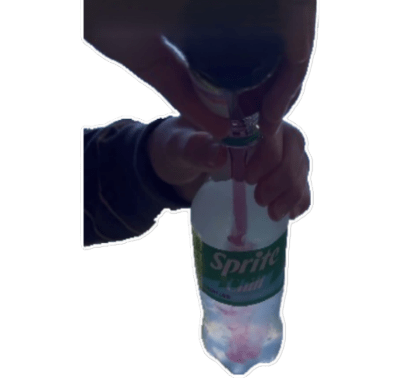
Image 2 Sippers’ preparation ritual: Pouring Up
Source: Screenshots retrieved from Instagram stories
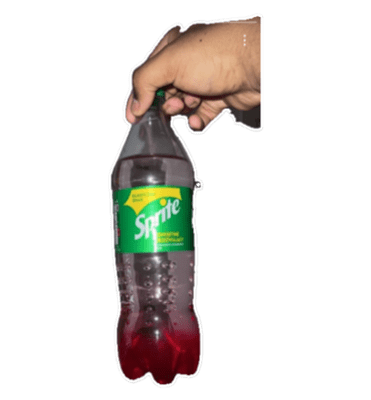
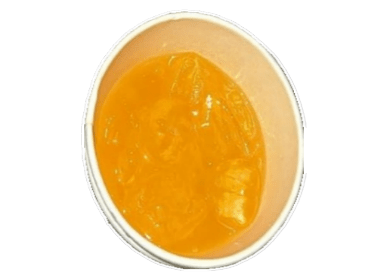
The next phase is called flipping, in which, once the pouring up is done, the bottle is closed and inverted by grasping the lid (see Image 4). This upside-down rotation facilitates the slow merging of the two liquids without flattening the drink. Finally, the mixture is transferred into a cup by culminating the ritual (see Image 5) where the process – with its gestures and tactile feel – is just as essential, if not more so, than the consumption itself as highlighted by most of my respondents.



“Yeah bro, I can’t lie, I love it bro. Me personally, I love the way it drops into the soda and flips. Honestly, me personally, I’m more addicted to the actual pour up, the actual like pouring up the soda, flipping it, watching the lean twirl inside the soda and drop to the bottom, and the colour changing and mix into a nice beautiful pink colour. Like bro I’m in love with that, that is what gets me excited when I pour up.” (VD from Canada, personal communication, 21st January 2025)
“I think the addiction is more than just the opioid addiction, the addiction for me is the taste, the smell, the pouring up, the whole activity of drinking lean is what I’m addicted to more so than the actual medicine itself. It’s deep, the status it gives you, the feeling it gives you, the way it makes you feel when you pouring up…” (OC from the UK, personal communication, 10th February 2025)
“It’s the ritual, pouring up, flipping a bottle, that ritual… the baby bottle, stuff like that. Mostly because I think my brain associates it with feeling good you know. That’s what I enjoy about it, but also like I hang out with my friends, we just pour up “okay, let’s pour up” you know together… sometimes I do it alone also…” (MD from Brazil, personal communication, 23rd January 2025)
The ritualism surrounding the preparation of lean emerged as one of the most frequently observed daily practices within lean culture during my fieldwork on social media platforms, especially Instagram, where it was predominantly shared through short videos in Instagram stories. These stories not only revealed the tactile and visual aspects of the preparation process during the pouring up and flipping but were also consistently accompanied by hip-hop tracks about lean highlighting, once again, the importance of sound while sipping lean and its multisensorial experience.
The presence of mobile phones to either record or take pictures of the ritual for preparing lean is also an integral part of this process. As much as the cough syrups, fizzy soft drinks, the cups, and baby bottles, therefore, mobile phones are part of the embodied and multisensorial experience that are needed as both a tool for documentation[1] and a medium through which this ritual is performed, shared, and spread worldwide within digital spaces. As such, social media platforms represent newly produced social spaces for drug cultures, to consume, perform, and share drug experiences at the blurred intersections of the online and offline (Manning, 2014). They also exemplify how imitative propagation and affective contagiousness unfold through the aesthetics of lean, rapidly transcending geographical and socio-cultural barriers and evolving into globalising cultural trends.
As criminologists increasingly advocate for an aesthetic and sensory turn in Criminology (McClanahan and South, 2020), significant progress has been made in exploring various criminological issues through these emerging theoretical and methodological lenses (see Herrity et al., 2021; Young, 2023; Holt and Lewis, 2024; etc…). The perspective I have offered on lean culture invites drug scholars to further explore the relevance of aesthetics and sensory experiences in contemporary recreational drug trends among young people worldwide. By doing so, it encourages discussions that could provide fresh insights into evolving patterns of drug consumption and contribute to a broader (sub)cultural analytical perspective that extends beyond the meanings of drugs and their motivations for use.
References
Herrity, K., Schmidt, B., and Warr, J. (2021). Sensory Penalities: Exploring the Senses in Spaces of Punishment and Social Control. London: Emerald.
Holt, A., and Lewis, S. (2024). A Sense of Danger: Gender-Based Violence and the Quest for a Sensory Criminology. Feminist Criminology, 19 (1), 3–24.
Manning, P. (2014). Drugs and popular culture in the age of new media. London: Routledge.
McClanahan, B. and South, N. (2020). All Knowledge Begins with the Senses: Towards a Sensory Criminology. The British Journal of Criminology, 60(1), 3–23.
Rancière, J. (2011). The emancipated spectator. (G. Elliott, Trans.). London, UK: Verso.
Sherratt, Y. (2007). Adorno’s aesthetic concept of aura. Philosophy & Social Criticism. 33(2), 155-177.
Walker, L. S. (2022). DJ Screw: A Life in Slow Revolution. Austin: University of Texas Press.
Young, A. (2023). Listening Criminologically: On the Materiality and Relationality of Sound. Criminological Encounters, 6, 146–56.
[1] Although lean can appear in different colours, it is most commonly associated with the colour purple.
[2] A double stacked cup, or simply double cup, is where one is supposed to sip lean. The reason for the use of double cups is to insulate the drink that needs to be sipped cold and to announce the consumption of lean as part of its visual aesthetic.
[3] Baby bottles are used to dose the cough syrup. One line of syrup, as marked on the baby bottle, would be an ounce and so on.
[4] Documenting the use of lean is important for “real” sippers as proof of their long-lasting relationship with lean that differentiates them from the so-called trend sippers, as those considered within the culture who sip momentarily just because it’s trending.


 Sensory Criminology